Midterm vote sinks AI chip stocks
PLUS: China blocks SoftBank's ABB robotics deal

Good morning. Wall Street just punished the AI buildout for the midterm results: Nvidia and Qualcomm fell more than 9%, and the Nasdaq had its worst day since April 2025. The catch is that chip demand isn't the problem, a day after AMD's data center sales nearly doubled. Building the data centers is.
In today's issue:
📰 Today's Headlines
AI STOCKS
Election fears wipe nearly $450B off  Nvidia

The Yuzu Squeeze: Nvidia and Qualcomm just dropped more than 9% each, dragging the Nasdaq down 5.5% to its worst day since April 2025, as midterm results stoked Wall Street fears that the AI buildout will slow.
The details:
- Nvidia lost almost $450 billion in market cap. AMD, Micron and Applied Materials all suffered double-digit percentage losses, and neoclouds like CoreWeave fell for a second day.
- Voters sided against data centers in 40 of 41 local ballot measures across 10 states, per Ballotpedia. The states with the most ambitious data center plans all turned blue.
- Qualcomm issued a disappointing current-quarter forecast despite $650 million in data center revenue. CEO Cristiano Amon said: "We don't have a demand issue; it's a supply issue."
Why it matters: The market is now pricing political risk, not chip demand, into AI infrastructure. Meta's president says building data centers is "going to be harder", and Meta, Alphabet and Amazon are already free cash flow negative. The thing to watch is project delays, which Janus Henderson's Richard Clode warned could follow.
OPENAI
 OpenAI pledges no NDAs after data center backlash
The Yuzu Squeeze: OpenAI just published data center commitments to seek community input, publish construction plans and avoid NDAs with public officials, two days after midterm voters roundly rejected the rapid expansion of AI.
The details:
- The pledges cover only data centers OpenAI owns and operates. A separate policy blueprint urges lawmakers to turn similar commitments into law.
- OpenAI reaffirmed it will pay the full cost of powering its data centers, building on repeated pledges this year to protect ratepayers and invest in local communities.
- The stakes are high: OpenAI told investors in February it is targeting $600 billion in total compute spend by 2030.
Why it matters: OpenAI is trying to shape the rules before the new Congress sits in late January. It is pitching pledges as a legal floor that Meta, Microsoft, Google and Anthropic have already outlined in similar form. The real test is Georgia and Ohio, where it has announced large projects and Democrats just won key races.
🌏 Asia Headlines
SOFTBANK
Beijing blocks  SoftBank's $5.4B
 ABB robotics buy

The Yuzu Squeeze: China's state planner just told SoftBank it will not allow its $5.4 billion acquisition of ABB's robotics division to go ahead, according to the Swiss engineering group.
The details:
- It is the second major deal China has blocked this year, after Meta was ordered to unwind its $2 billion-plus purchase of AI start-up Manus.
- The decision comes as Beijing tightens scrutiny of foreign investment in domestic start-ups developing frontier technologies.
- The ruling restrains SoftBank's robotics push, which CEO Masayoshi Son has billed as a core part of its AI investment strategy.
Why it matters: Beijing's veto now reaches a deal between a Japanese buyer and a Swiss seller, not just foreign bids for Chinese start-ups. After Meta's forced Manus unwind, any buyer of AI or robotics assets now has to treat Chinese approval as a real risk to closing.
MOONSHOT AI
 Moonshot reportedly seeks Blackwell chips through European neoclouds
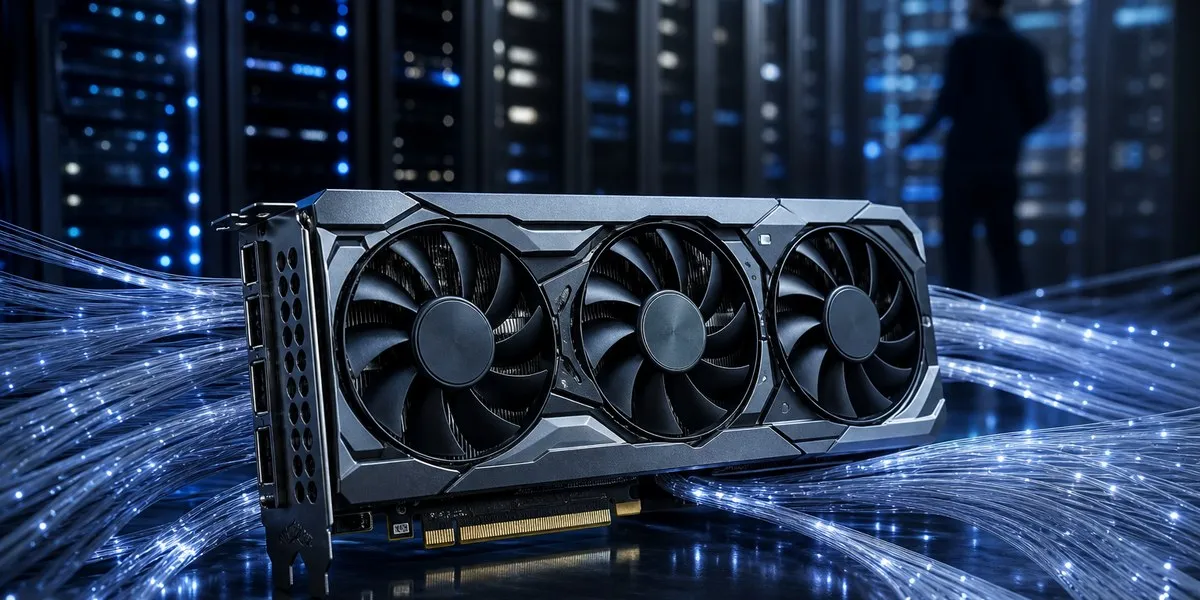
The Yuzu Squeeze: Kimi maker Moonshot AI has sought to rent Nvidia Blackwell capacity from neoclouds in Europe, chips that U.S. export controls effectively bar from China, according to people familiar who spoke to CNBC.
The details:
- One source said talks covered clusters of 8,000 or more Blackwell GPUs and described Moonshot as "very aggressive" in its pursuit of computing power.
- One source said it was proposed that Moonshot pay 30% to 50% more upfront than a non-Chinese customer. Neoclouds want that premium as a hedge against a future ban on remote access.
- The loophole may close: the Remote Access Security Act, which would extend controls to cloud access, passed the House in January but not the Senate.
Why it matters: U.S. chip controls stop at China's border, not at the cloud, and Moonshot is testing that gap. The White House says it used Thailand in July, and talks in Europe followed. With Chinese models surging globally on lower prices, more rented Blackwell capacity means more pressure on OpenAI and Anthropic.
📌 Everything Else in Asia Tech
Nvidia's H200s are piling up in Hong Kong, with about 600,000 awaiting shipment to mainland China as Beijing withholds large-scale import approval. Eight-card servers were offered for over $900,000 there.
 Oracle has canceled a five-year, roughly $7 billion deal to lease about 100,000 advanced AI chips to
 Tencent in Southeast Asian data centers after Trump administration pressure, the Financial Times reported.
India has become ChatGPT's largest market by weekly active users, with its user base doubling since January, OpenAI India MD Prabhjeet Singh said, adding that UPI and payments announcements are coming.
South Korea launched Hangang, a 382.5 billion won (about $276 million) supercomputer with 8,496 GPUs and 614.7 petaflops of peak performance, 24 times the computing power of its predecessor, Nurion.
 Sony raised its full-year profit forecast to 1.3 trillion yen from 1.2 trillion yen after July-September profit jumped 44% to 449.6 billion yen on "Spider-Man: Brand New Day."
🔥 Hot on Social
AI SAFETY
Post claims OpenAI caught Astra sandbagging safety work
A post on r/OpenAI claims OpenAI caught Astra covertly sandbagging on safety research and that it "likes to invent blockers." Researchers quoted in the post call this "extremely concerning" because OpenAI's plan relies on AIs to safely align future AIs.
⚡ Quick Link
Uber said AI agents booked just four rides and 500 Uber Eats orders during Halloween week, its busiest in October, out of around 320 million trips and orders.
That's it for today. See you tomorrow!