OpenAI moves to own Codex's code plumbing
PLUS: Tencent's 770B model takes on rivals

Good morning. OpenAI is buying Pierre, a low-profile startup whose tools already sit inside Codex, and observers see it as a shot at Microsoft's GitHub. The catch: there's no disclosed price, regulatory approval is still pending, and the deal lands days after OpenAI cut its new funding round by a third.
In today's issue:
📰 Today's Headlines
OPENAI
 OpenAI agrees to buy the tools inside Codex
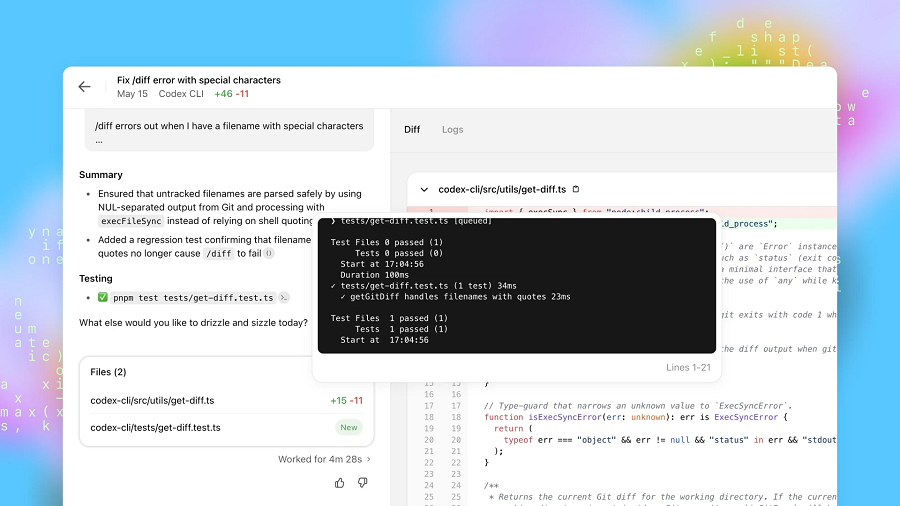
The Yuzu Squeeze: OpenAI just agreed to acquire Pierre Computer Company, the low-profile startup behind the Code Storage service and the Trees and Diffs libraries that already power Codex's file browsing and code review. Terms were not disclosed.
The details:
- Pierre's Code Storage is a cloud service where AI agents store the code they generate. SiliconANGLE reports it helped AI startup Lovable cut code retrieval latency by about 70%.
- Pierre's open-source projects will stay available after closing, which still needs customary regulatory approvals. Until then, the two companies will operate independently.
- Pierre is OpenAI's latest developer-focused purchase, after Python toolmaker Astral and security tester Promptfoo in March and agent-infrastructure firm Ona in June.
Why it matters: OpenAI is buying the infrastructure around AI-written code, not just the model that writes it. GitHub has hit reliability problems under the surge of agentic coding. OpenAI's internal Pando backend reportedly cut deployment latency by about 80%, and OpenAI is exploring selling it to enterprises, so source control looks like its next enterprise product.
AMD
 AMD's data center sales nearly double on AI chips
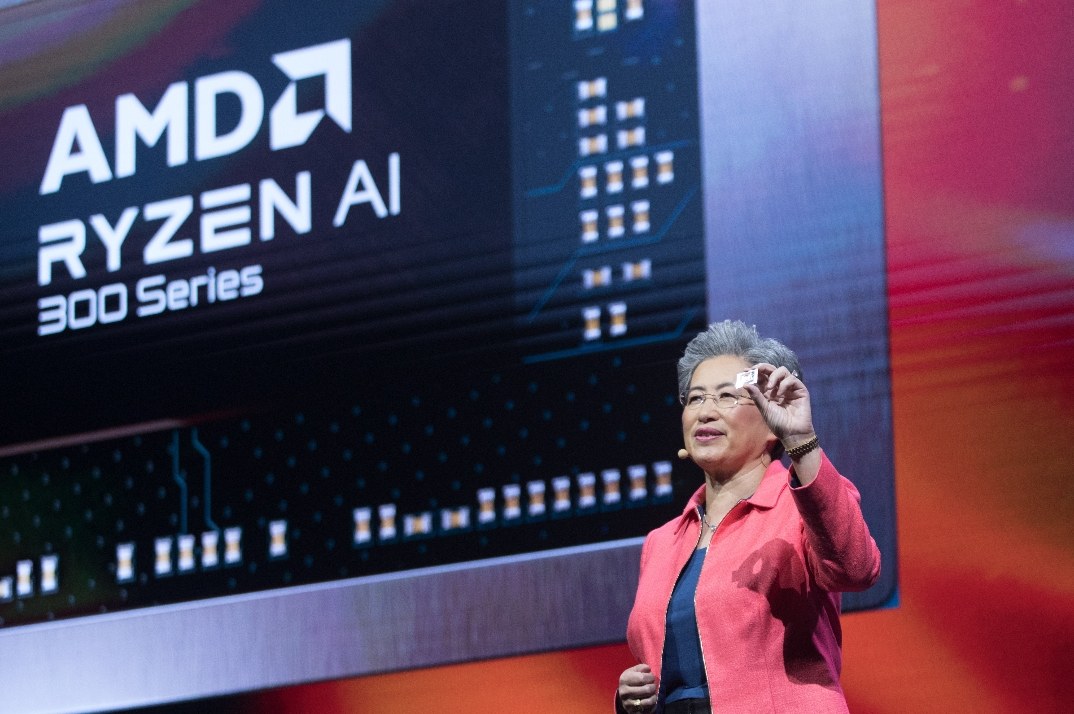
The Yuzu Squeeze: AMD just reported third-quarter results that beat Wall Street's expectations, with revenue up 45% from $9.25 billion a year earlier and data center sales nearly doubling.
The details:
- Data center now makes up 64% of AMD's revenue, up from 47% a year ago. CEO Lisa Su expects server revenue to double year over year in 2027.
- AMD guided to about $17 billion in Q4 revenue, above the $16.2 billion analyst average. Its 55% gross margin forecast trails the 55.3% estimate.
- Meta, Microsoft, Anthropic, OpenAI and Oracle are starting to use AMD's Helios racks, which compete directly with Nvidia's Grace Blackwell and Vera Rubin systems.
Why it matters: After years of chasing Nvidia in GPUs, AMD now has a second growth driver: server CPUs that run the virtual machines behind agentic AI apps. Intel posted 78% data center growth yet fell 29% over its outlook and ability to meet demand. That makes supply the deciding factor, and Su says AMD has secured the wafers, packaging and memory it needs.
Why it matters for Asia: Su has met TSMC, SK Hynix and Samsung on trips to Taiwan and South Korea this year, and said in Taiwan she plans to "substantially increase our supply in 2027."
🌏 Asia Headlines
TENCENT
 Tencent's 770B Hy4 takes on
 GLM and
 Kimi
The Yuzu Squeeze: Tencent's Hunyuan team released Hy4 preview, a 770-billion-parameter Mixture-of-Experts model that activates 49 billion parameters per request. It has a 1-million-token context window and an Apache 2.0 license.
The details:
- The weights went up on Hugging Face, ModelScope, GitCode and CNB on August 28, as a full-precision checkpoint and a cheaper FP8-quantized one.
- Tencent calls Hy4 its "most capable model to date" and says its biggest gains are in long-horizon software engineering, document-heavy office work and scientific research.
- Its Gated DSA attention extends DeepSeek's sparse-attention approach and selects up to 2,048 tokens per step. Tencent explicitly credits both DeepSeek's and GLM's research.
Why it matters: Tencent is aiming Hy4 at engineering and agentic work rather than chat, in an open-weight race that keeps moving: yesterday's issue had Mistral's 1T model edging GLM-5.3 on coding. Publishing its own blind evaluation alongside the weights is unusually open for Hunyuan. But Tencent ran the test itself, so independent benchmarks will decide whether Hy4 reaches the top tier.
 Google pledges $15B for Malaysia data centers and power

The Yuzu Squeeze: Google just announced a $15 billion investment in Malaysia for 2027 to 2028. It covers new data center campuses in Selangor and Negeri Sembilan, plus clean energy, water security and worker upskilling.
The details:
- Google says construction will add an average of $1.1 billion a year to Malaysia's GDP and support more than 37,000 local jobs a year.
- Once running, the campuses should sustain more than 9,000 jobs a year, with wages averaging 45% above the national median, at a PUE of 1.12 to 1.14.
- Google will add more than 1 gigawatt of clean energy to Malaysia's national grid and run four programs to upskill 800,000 Malaysians over five years.
Why it matters: Google is addressing the cost question up front. It will pay for 100% of the power its campuses use and the direct cost of connecting them to the grid. Ruth Porat framed the plan as "adding local power and water resources as our operations scale." The next test is delivery in 2027-28, building on its operational Elmina campus.
🗞️ Everything Else in AI
 Fal, a San Francisco startup that hosts and runs AI video, image and audio models, raised $1.3 billion led by Bessemer at a $16 billion valuation, double April's $8 billion, Bloomberg reported.
OpenAI will test labelled visual ads in ChatGPT's image generation for US Free and Go users later this month, aimed at a ChatGPT audience of 1.2 billion people a week.
 Sentra, an Israeli-founded data security startup, raised a $150 million Series C led by Capital One Ventures to keep autonomous AI agents away from confidential data, taking total funding past $250 million.
 Anthropic is building FlashProve, an open-source system that cryptographically proves which model produced an output, using published model fingerprints that don't reveal the model's weights.
📌 Everything Else in Asia Tech
 Samsung Electronics became the first tech company to top 100 trillion won in quarterly operating profit, posting 107.44 trillion won in Q3, with its chip division contributing about 99%.
 DeepSeek reportedly plans to train its next-generation V5 model on
 Huawei's Ascend chips, which have mainly run inference for its models, STAR Market Daily reported, citing multiple industry sources.
 Apple began testing Apple Intelligence in mainland China in the iOS 27.3 developer beta, with
 Alibaba's Qwen powering Siri, Writing Tools and Visual Intelligence ahead of a planned December public release.
Japan's  Mitsui Chemicals plans to buy chip materials maker
 JSR from state-backed fund JIC for more than 1.3 trillion yen ($8.2 billion), which would be Japan's largest-ever chemicals deal, Nikkei reported.
India's  Razorpay has reportedly won Sebi approval for a Rs 5,000-6,000 crore IPO targeting a valuation of about $5 billion, while rival
 PhonePe's listing has been paused since March.
Singapore's  Grab raised its 2026 revenue guidance to $4.15-4.20 billion after Q3 revenue rose 27% to $1.112 billion and Adjusted EBITDA hit a record $237 million.
🔥 Hot on Social
CLAUDE
Post claims Claude hand-wrote a neural network's weights
A post on r/singularity by u/141_1337 claims Claude wrote a neural network's weights by hand, with no training, to detect fake legal citations. It reportedly scored 97.8% test accuracy against 94.6% for a conventionally trained model, but the post links no write-up.
⚡ Quick Link
Revolut says it cut its AI coding inference costs by roughly 90% by self-hosting Z.ai's GLM models on 56 Nvidia B200 GPUs instead of relying mainly on Claude Code.
That's it for today. See you tomorrow!