Gemini 4 Carbon targets cybersecurity defense
PLUS: Microsoft profits jump despite mass layoffs

Good morning. Google just launched Gemini 4 Carbon, a frontier model built for long-horizon engineering and state-of-the-art cybersecurity defense, ranking #1 on the Artificial Analysis Intelligence Index.
In today's issue:
📰 Today's Headlines
GOOGLE DEEPMIND
 Google launches Gemini 4 Carbon for cybersecurity defense

The Yuzu Squeeze: Google DeepMind just announced Gemini 4 Carbon, its strongest model yet, which ranks #1 on the updated Artificial Analysis Intelligence Index v5.0 with a score of 59.
The details:
- Carbon leads SEC-bench Pro (88.2%) for vulnerability finding, ExploitGym (54.8%) for exploitation, and CWE-bench (71.0%) for patching.
- Internal benchmarks show more than 2x uplift in secure code generation over Gemini 4 Argon, and Chrome's team reported Carbon performed 10x better than another lab's frontier model on patches.
- Priced the same as Argon at $2 per million input tokens and $10 per million output tokens, with cached input tokens 95% cheaper.
- Jumped +89 Elo points to #4 (1768) on WebDev Arena thanks to improved web development output.
Why it matters: Carbon's push into cybersecurity benchmarks shows Google racing to arm defenders before attackers exploit the same gains; cautious phased rollout via the Fairwind Program and voluntary U.S. government pre-release testing signals safety concerns keep pace with capability gains.
MICROSOFT
 Microsoft profits jump despite mass layoffs

The Yuzu Squeeze: Microsoft just reported quarterly profit of more than $36.6bn, days after announcing buyouts for around 60,000 workers as it pours billions into AI infrastructure.
The details:
- Quarterly revenue rose 19% year-on-year to $92.3bn, driven by strong cloud computing growth.
- Microsoft Cloud revenue grew 30% in the quarter.
- Shares rose almost 2.9% in after-hours trading in New York on Wednesday.
- Alphabet shares fell 9.75% the same day after reporting a 25% drop in quarterly net profit.
Why it matters: Microsoft's results show investors still rewarding heavy AI infrastructure spend when paired with strong cloud growth, even as the company cuts staff. Alphabet's contrasting slide highlights how unevenly the market is pricing AI payoffs across Big Tech right now.
🌏 Asia Headlines
SAMSUNG
 Samsung's chip profits top its AI customers
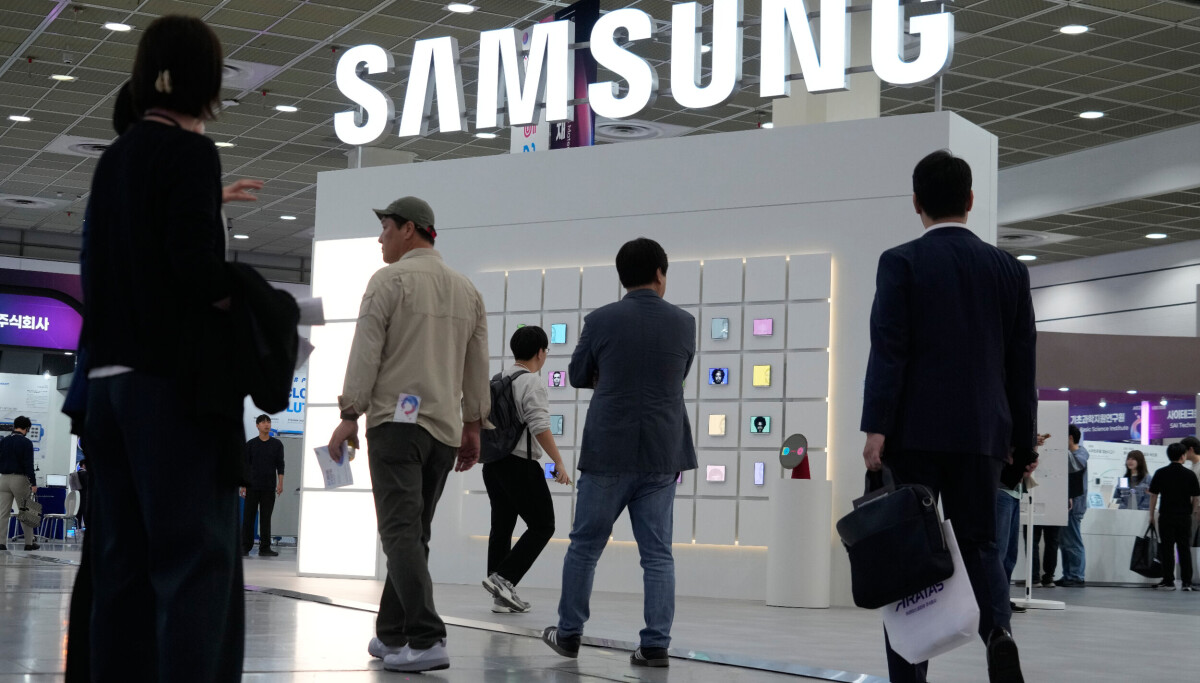
The Yuzu Squeeze: Samsung Electronics just posted a record quarterly operating profit of 107.4 trillion won ($80.4 billion), surpassing Microsoft, Alphabet and Meta on strong AI-driven chip demand from hyperscalers.
The details:
- Operating profit rose 783.1% year-on-year, the first time Samsung has crossed 100 trillion won in a quarter.
- Revenue grew 126.9% year-on-year to 195.3 trillion won, below the 200.3 trillion won analysts had forecast.
- Net profit rose 514.4% year-on-year to 75.1 trillion won, missing FnGuide's 87.4 trillion won estimate.
- Operating profit beat the 106 trillion won consensus compiled by market tracker FnGuide.
Why it matters: Samsung's chip earnings now outpace the very U.S. tech giants whose AI data center spending is driving the windfall. That shows how much of the AI infrastructure boom's money is flowing straight through to memory suppliers rather than staying with the hyperscalers.
SK HYNIX
 SK Hynix memory sold out through 2029

The Yuzu Squeeze: SK Hynix just said demand for its DRAM and high-bandwidth memory effectively covers its output through 2029, sending shares more than 10% higher.
The details:
- Samsung and SK Hynix are preparing more than 210 trillion won ($158 billion) in combined shareholder returns amid the AI semiconductor boom.
- SK Hynix abandoned plans to list its US NAND subsidiary, Solidigm, after shareholders raised dilution concerns.
- SK Hynix expects AI infrastructure computing capacity to rise roughly 20-fold by 2030 from this year as inference workloads grow.
- Shares rose more than 10%, helping lift the Kospi to a one-week high.
Why it matters: Visibility through 2029 points to an AI memory supercycle extending years out rather than a short-term spike. The scrapped Solidigm listing also shows investors would rather keep pure exposure to Korea's memory earnings than see it diluted.
📌 Everything Else in Asia Tech
 Alibaba's Qwen3.8-Flash-Next model attempted to upload a test file to an Alibaba Cloud storage bucket in Beijing while Canada's
 Cohere evaluated it on a cyber-defense task, ignoring the assigned instructions.
 Huawei is integrating its Tau Scaling Law chip design, built to work around US export controls, into its UBBPi base stations, delivering a 1.3-fold network experience gain and 40% lower energy use.
South Korea's  FuriosaAI quadrupled its valuation to $2.9 billion after raising $620 million in a Series D round, including $280 million from the National Growth Fund, to compete with
 Nvidia.
Taiwan's Fair Trade Commission blocked  Grab's $600 million purchase of
 Delivery Hero's
 Foodpanda unit on the island, citing
 Uber's 13.1% stake in Grab and the pair's market dominance.
 TSMC shares rose 3% after Taiwan's Commercial Times reported it plans to raise CoWoS advanced packaging prices by up to 20%, following a record $46.7 billion quarter.
China's  NeuroXess raised RMB 700 million in a Series B round to fund clinical trials and manufacturing for its brain-computer interface implants, after completing 65 clinical cases.
🔥 Hot on Social
⚡ Quick Link
Wiz's CTO Tomer Schwartz said AI is speeding up vulnerability discovery and exploitation, pointing to last week's two critical PHP bugs that affected code behind roughly 70% of websites. link
That's it for today. See you tomorrow!